
Choosing to refuse: why AUTODOC supports Plastic Free July
How quality repairs, maintenance and reuse of parts are replacing the habit of prematurely scrapping cars, helping to save tons of CO₂.
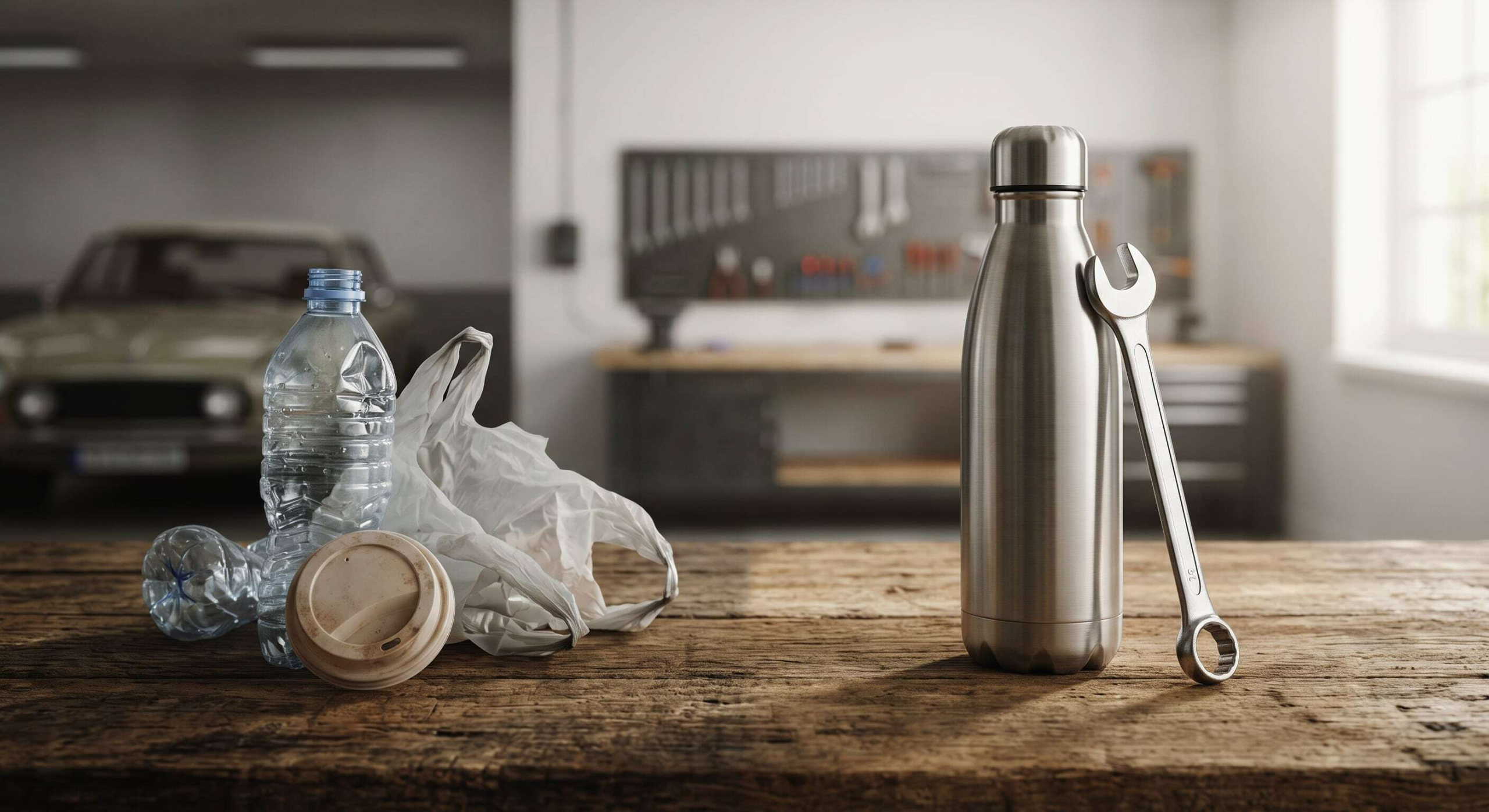
Every July, millions of people around the world pause to ask a simple question: Do I really need this piece of single-use plastic? Plastic Free July has turned that question into a global movement. At AUTODOC, we recognise the movement not as something separate from what we do, but as a clear reflection of the principles that already sit at the heart of our approach to sustainability. This is why we are proud to stand behind its message.
A global movement built on small steps
Plastic Free July is a shared global movement that helps people reduce plastic waste through simple, everyday choices and become part of the solution to plastic pollution. Its invitation is deliberately modest: choose to refuse single-use plastics, starting in July and, ideally, continuing well beyond. The premise is that when many people make small changes, those changes add up to a big difference for streets, oceans and communities.
The scale of that difference is striking. The movement has inspired over 170 million participants across 190 countries. It is run by the Plastic Free Foundation, a registered charity based in Australia that operates across the globe. The foundation shares resources and ideas for individuals, workplaces, schools and communities to cut single-use plastic waste at home, at work, at school and even at the local café.
What we find compelling about Plastic Free July is not only its reach but its philosophy. Choosing to refuse a single-use item in July often leads people to discover alternatives that become permanent habits. In other words, a one-off decision becomes a lasting behaviour. That idea – that small choices, repeated and multiplied, add up to something much bigger – is exactly how we think about our own role in mobility.
Why a single-use mindset matters beyond plastic
At first glance, an automotive aftermarket company and a plastic-reduction charity might seem to occupy different worlds. Look a little closer and the connection becomes obvious. Plastic Free July challenges the logic of using something for a few minutes and then throwing it away when it could have been avoided or replaced with something reusable. The automotive world has its own version of that logic: replacing a whole vehicle, or discarding parts, when repair, maintenance and reuse would have served far longer.
This is where our business and the spirit of Plastic Free July meet. AUTODOC’s approach to sustainability centres on close collaboration and on practical, everyday activity in the aftermarket. By giving people easier access to parts, repair guides, diagnostic tools and support, we help make repair and maintenance a realistic choice, which can extend the working life of a vehicle. Where Plastic Free July asks people to refuse the disposable, we help people refuse the premature scrapping of what can still be repaired, upgraded and kept on the road.
Circularity is a useful lens here. Repairing, upgrading and maintaining a vehicle keeps it in use rather than replacing it and that reuse of existing parts and components is central to what the automotive aftermarket does – it saves a lot of CO2 – even if it is an old ICE car – to continue using a car instead of manufacturing a new one. AUTODOC’s role is to make that easier: we offer access to spare parts, remanufactured products, repair guides, digital tools as well as personal technical support that foster repair and reuse. Keeping vehicles in service for longer is not a side effect of our business; it is central to how we aim to create value for our customers.
What AUTODOC is doing about waste and packaging
Supporting a movement is only meaningful if it is matched by action within your own operations. For AUTODOC, waste and packaging form one of four top sustainability goals, alongside climate action across the value chain, workplace culture, product integrity and customer trust.
Our smart waste and packaging goal is straightforward in its ambition: to reduce waste and optimise packaging. In practice, that covers optimising packaging, cutting material waste and improving resource efficiency across our operations. This is the part of our strategy that speaks most directly to the conversation Plastic Free July starts each year because packaging and single-use materials are precisely where everyday consumption meets environmental cost.
We are honest about where we are on this journey. We have defined a clear set of goals to guide our next steps and these goals focus on the areas most relevant to our business and our stakeholders, while strengthening how we operate alongside customers and partners. Our sustainability goals and key performance indicators are intended to serve as the foundation for measurable actions and initiatives still to come. Setting out our direction openly, rather than overstating our progress, is the approach we have chosen to take.
The rigour behind our commitments
Credibility on sustainability comes from process as much as intention, and this is an area where we have invested seriously. In February 2025, we completed a comprehensive double materiality assessment, aligned with the European Sustainability Reporting Standards (ESRS). This assessment was built on engagement with our stakeholders, including employees, customers, investors and suppliers, and it helped us identify the sustainability topics that matter most from both a financial and an impact perspective. Those findings shaped the goals described above, including our work on waste and packaging.
In the same year, and in line with regulatory requirements, we published our first report under the German Supply Chain Due Diligence Act, known as the LkSG (Lieferkettenschutzgesetz). Our governance is designed to comply with the Corporate Sustainability Reporting Directive (CSRD) and we regularly review and update it against the CSRD and the ESRS to ensure we remain accountable to our stakeholders.
That accountability is embedded in how the company is run. Ultimate responsibility for sustainability lies with our Chief Executive Officer (CEO), who ensures that it is integrated across all relevant business areas and decision-making. A cross-functional Sustainability Committee, which includes the CEO, the Chief Financial Officer, the Chief People Officer, the SVP Supply Chain and the SVP Legal, meets regularly to review objectives, monitor progress and steer our environmental, social and governance agenda. A dedicated Sustainability Management function handles the operational side, supported by a cross-departmental Sustainability Team drawn from areas including supply chain, procurement, legal, finance, people and communications. Sustainability-related risks and opportunities are integrated into our broader risk management system, so that these considerations are weighed systematically rather than treated as an afterthought.
Everyday choices, at work and beyond
One of the reasons Plastic Free July resonates so widely is that it meets people wherever they are. It offers ideas for getting started and for taking the next step and it tailors those ideas to different settings – at work, at school, at events, in business, in the community and even in local government. It recognises that change happens through many small decisions in many different contexts.
We see the same principle at work in our own model. Helping people extend the life of their vehicles depends on easy access to automotive parts, services, repair guides, sophisticated digital tools and excellent customer service. Each of those makes it more practical to repair rather than replace, in the same way that a reusable cup or bag makes it more practical to refuse single-use plastic. As a technology-powered leader in the European automotive aftermarket, we see giving people the parts, guidance and tools to maintain their vehicles as a concrete contribution we can make. For us, that means clear repair guidance and helping our customers make informed decisions.
As our Chief Executive Officer, Dmitri Zadorojnii, has put it, innovation and sustainability go hand in hand. Supporting Plastic Free July is a small but genuine expression of that view – an acknowledgement that the movement’s core idea, refusing the wasteful in favour of the durable and reusable, is one we share.
Part of the solution, together
Plastic Free July reminds us that no single action solves plastic pollution and that the movement’s strength lies in millions of people choosing to refuse, together. Our sustainability work follows the same logic. It is both an opportunity and a shared effort, one that depends on partnering across the industry to improve efficiency and transparency over time.
We do not claim to have all the answers and we are candid that much of our measurable work still lies ahead. But we know which direction we are travelling in and we know that movements like Plastic Free July help keep the whole conversation moving. We welcome collaboration, dialogue and ideas from suppliers, partners and customers on how we can reduce waste and support repair together. Anyone who would like to discuss these topics with us can reach our Sustainability Manager, Beril Kaptan, at sustainability@autodoc.eu.
This July, and every month thereafter, the invitation is the same that Plastic Free July extends to everyone: choose to refuse what you do not need and choose to keep what still has life in it. It is a principle worth driving forward.
Sources
- Plastic Free July – official site, including participation figures and movement information: https://www.plasticfreejuly.org/
- AUTODOC sustainability – sustainability strategy, top goals, governance structure, double materiality assessment, LkSG reporting and the quotation from our Chief Executive Officer: https://autodoc.group/en/sustainability/
Created at 06.07.2026