
What are remanufactured car parts and why do they matter?
Remanufactured car parts offer the performance of new components while reducing costs and keeping valuable materials in use. Learn how the remanufacturing process works, why it matters for drivers and the environment and what to know before choosing a remanufactured replacement part.
Driving sustainable change
When a part in your car fails, your first thought is usually the cost of replacement. But what if that same part could be given a second life — rebuilt to factory standards, guaranteed safe and sold at a lower price? That’s the idea behind remanufactured car parts: a lower price for you, with the existing part kept in use instead of producing a new one from scratch.
What does “remanufactured” mean?
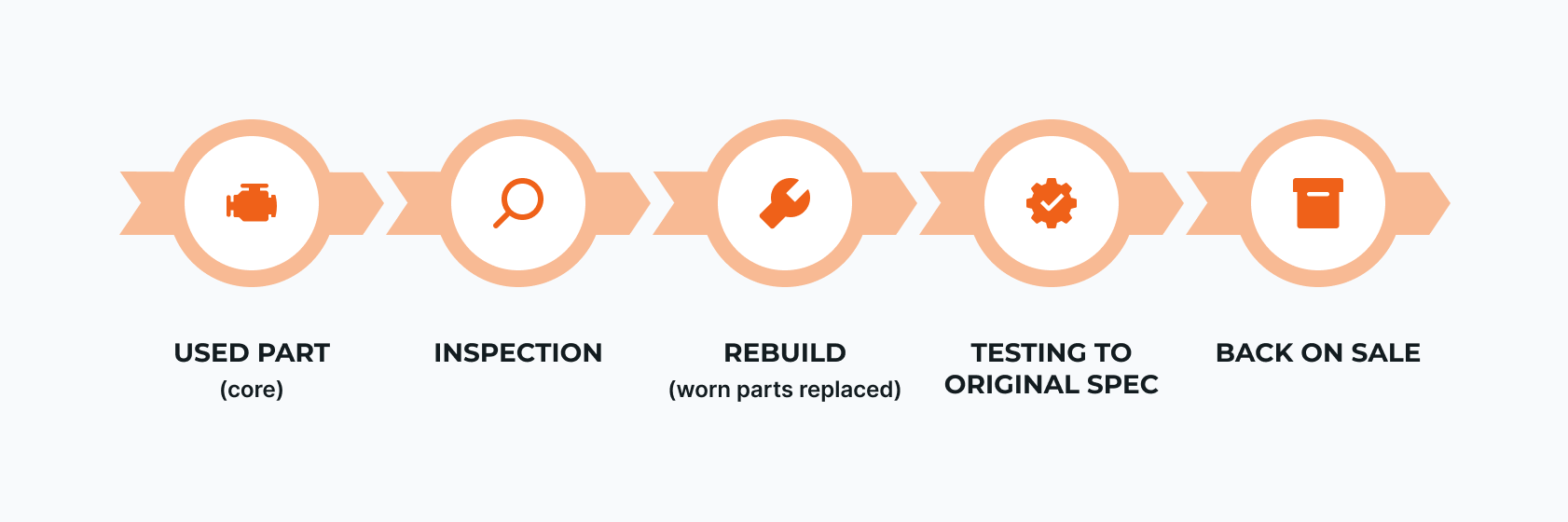
Remanufacturing is not just repairing or recycling. It’s an industrial process in which used car parts are completely dismantled, cleaned and checked for wear. Any damaged or worn elements are replaced with new ones, and the part is then tested to the same standards as a brand-new product.
At the end of the process, the part performs like new and is backed by a warranty.
Used vs. new vs. remanufactured
Used parts are taken from other vehicles and sold on with limited checks. New parts are manufactured entirely from fresh materials, which requires significant energy and raw resources. Remanufactured parts sit in between: they reuse existing materials but are restored and tested so that their performance matches new.
Benefits for customers
For drivers, remanufactured parts strike a strong balance. They cost less than new parts while delivering comparable reliability, and because they’re tested against original performance standards, safety is not compromised. Like new parts, they come with a warranty, giving customers confidence when fitting them.
There’s a regulatory backdrop too. The EU End-of-Life Vehicles Directive requires carmakers to prioritise the reuse and recovery of parts, and the EU’s Circular Economy Action Plan identifies remanufacturing as a route to keeping materials and resources in use for longer.
What remanufacturing saves in resources and emissions
Remanufacturing reuses the existing core of a part — the main metal body and major components — instead of producing them again from raw material. Producing a part from scratch is energy- and resource-intensive; reusing the core avoids much of that production, and keeps the old part out of waste streams.
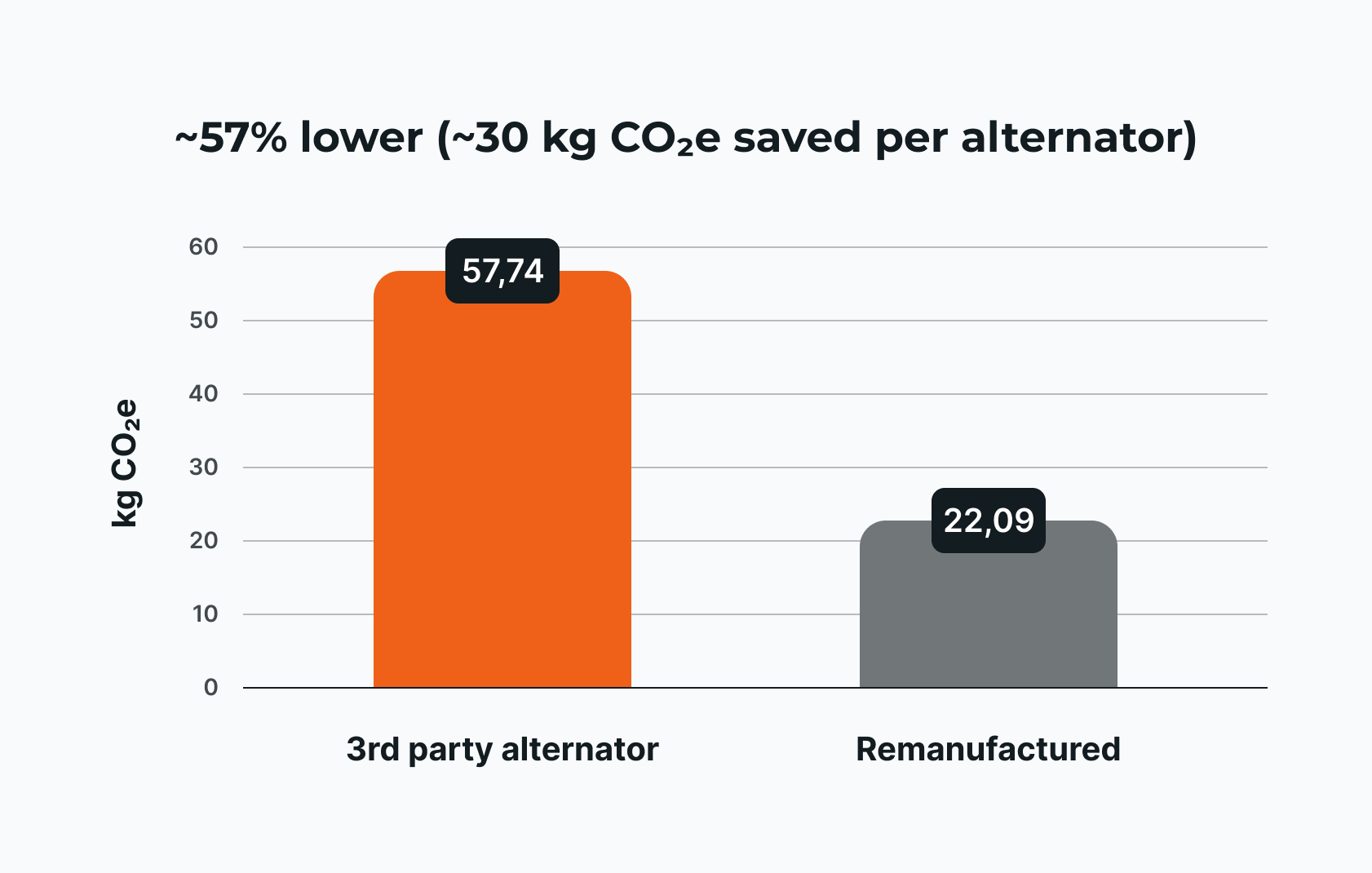
For example, a 3rd party alternator has a cradle-to-gate carbon footprint of 51.74 kg CO₂e when produced new, compared with 22.09 kg CO₂e for the remanufactured version — a reduction of about 57%, based on AUTODOC’s 2025 product carbon footprint pilot (cradle-to-gate calculation).
Returning your old part: the core return and core charge
AUTODOC core return process: pay the core charge, receive the new part, return the old core to the warehouse, core charge refunded after inspection (approx. eight weeks). The returned part is inspected and, where suitable, used in the remanufacturing process, helping keep valuable materials in circulation.

FAQ
Are remanufactured parts safe?
Yes. Every part is tested to meet original performance standards.
Do remanufactured parts come with a warranty?
Absolutely. Just like new parts, they’re covered for 12 months.
Will a remanufactured part fit my car the same way as a new one?
Yes. Remanufactured parts are restored to original specifications, so they fit and function just like new components.
Why it matters
Remanufactured car parts offer the same performance and reliability as new, at a lower cost. In our 2025 carbon footprint pilot, one remanufactured alternator showed a 57% lower cradle-to-gate footprint than its new equivalent, see the example above. Next time your car needs a replacement part, remanufactured parts are worth considering.
Created at 27.07.2026