
Fuel first, fixes later: the hidden cost of the pump shock for diesel drivers
AUTODOC (opens in a new tab) data shows maintenance takes a back seat as diesel prices climb to record highs. Here’s why staying proactive is the smarter way to save money and protect your vehicle.
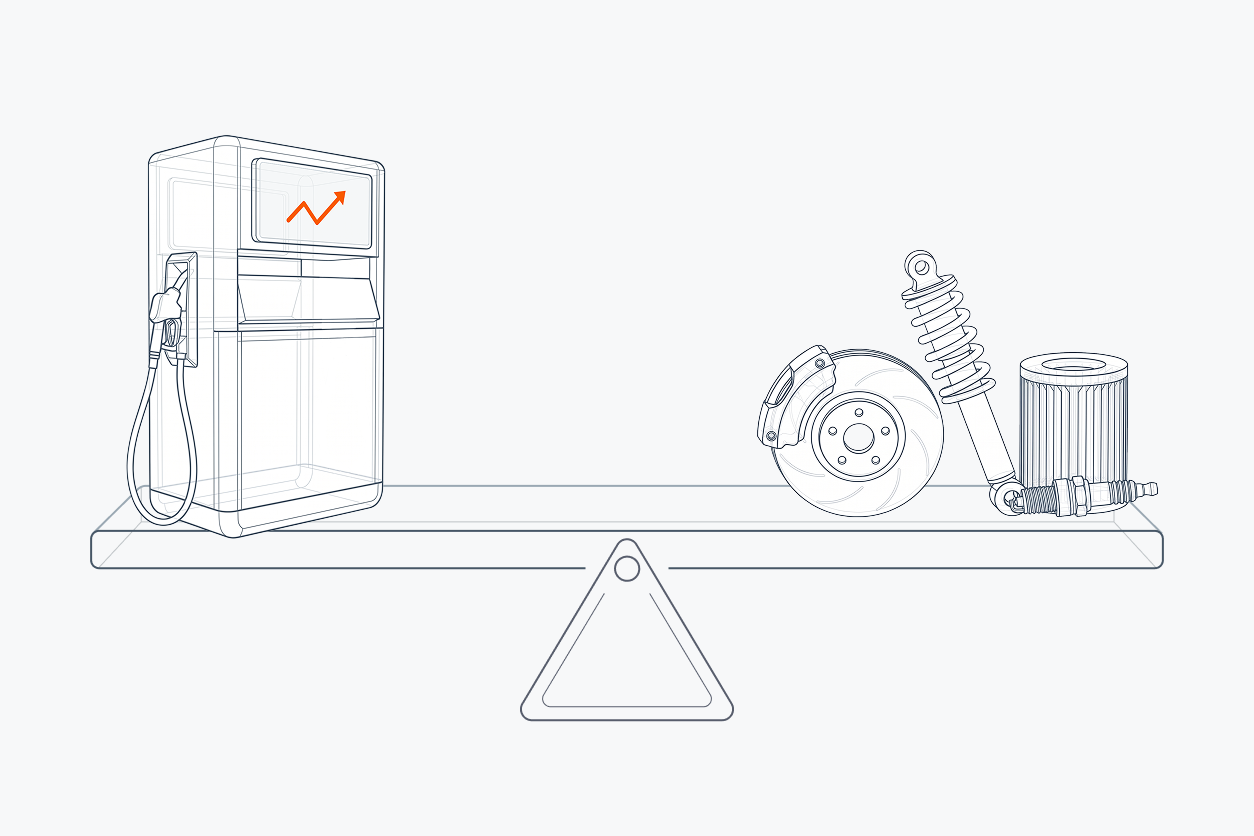
How fuel prices are changing driver behaviour
There is no ignoring the numbers at the pump. With diesel prices hitting record highs across Europe this year, the financial realities of driving have fundamentally shifted. So, how are regular drivers reacting?
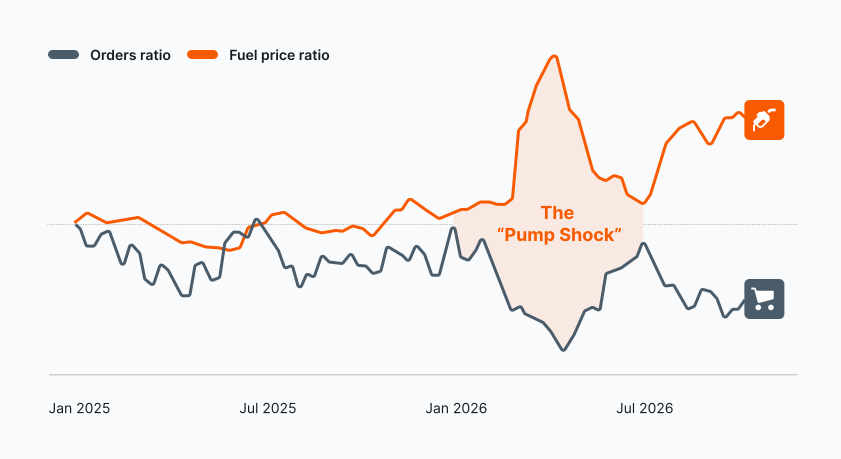
Our latest data reveals a clear overall trend: an inverse relationship between soaring diesel prices and the overall share of part orders for diesel vehicles. When the cost of fuel spikes, vehicle owners tend to tighten their belts, putting repairs and general maintenance on hold.
But putting off repairs is a risky strategy for a continent driving older cars. Despite the rise of electric vehicles (EVs), the European fleet is still overwhelmingly made up of petrol and diesel models, with an average age of 12.7 years. For the drivers keeping ageing diesels running, maintenance is an essential requirement to protect the vehicle’s value and performance and avoid hefty repair bills down the road.
The inverse relationship between diesel prices and the share of part orders for diesel vehicles
Diesel products dominated the automotive aftermarket in many countries before the January 2026 fuel crisis, when diesel was still cheaper than petrol. However, by mid-April, diesel prices became over 13% more expensive than petrol across Europe. In direct response, the order share for diesel vehicle parts vs non-diesel parts dipped by over 14% below normal baseline levels when the average price for diesel reached over €2 per litre.
Impact of fuel prices on the diesel vs. non-diesel order ratio in Europe
The regional context: how did different markets respond?
In France, orders for diesel parts significantly outnumbered non-diesel parts in early 2026, with 2.23 diesel vehicle part orders for every non-diesel part order. Yet, when diesel prices spiked to nearly €2.31 per litre, even French diesel drivers paused their purchases, causing this figure to drop to 1.94 by late April (a decline of 13%). France is a diesel-heavy market, with a share of 48.3% in 2024.
For comparison, the shift also showed up in Germany, where only 28% of the vehicles have diesel engines. In early 2026, German drivers placed roughly 8 diesel vehicle orders for every 10 non-diesel orders, representing a steady baseline. The data revealed that when the sudden price spike pushed diesel to €2.43 per litre by early April, this ratio fell to 7:10.
Belgium – with a diesel vehicle share of 30.1%, comparable to Germany – saw the most significant decline during the fuel price peak, probably driven by the sudden large price gap between diesel and petrol. Early in the year, when diesel was priced at a more manageable €1.70 per litre, orders for diesel vehicles maintained a strong lead with 12.9 orders for every 10 non-diesel ones. Then, as diesel prices increased to €2.34 per litre and petrol prices averaged at €1.98, consumer behaviour shifted rapidly. We saw the order share ratio change to 9.8:10, which meant flipping the scales.
Relative decline in diesel
order ratio
Tap on a country for more
-
The most surprising reaction to diesel price increases, showing a significant change in the share of orders for diesel vehicles
-
Sweden's rapid transition to EVs and different economic buffers may have shielded the market from the sharper drops seen in Southern Europe.
-
While diesel orders are still way ahead of non-diesel categories, this market saw the fastest decline as fuel prices peaked.
-
As Germany's passenger fleet is less diesel reliant than in other markets, order shares remained more stable.
-
Despite a heavy reliance on diesel vehicles, Spanish drivers noticeably pulled back on diesel orders during the peak of the fuel shock.
-
As pump prices soared, Italian drivers quickly adopted a 'wait-and-see' approach to vehicle maintenance.

| Country | Value | Impact level | Description |
|---|---|---|---|
| Belgium | –23.7 % | 6 of 6 | The most surprising reaction to diesel price increases, showing a significant change in the share of orders for diesel vehicles |
| Sweden | -6.6% | 2 of 6 | Sweden's rapid transition to EVs and different economic buffers may have shielded the market from the sharper drops seen in Southern Europe. |
| France | -9.8% | 5 of 6 | While diesel orders are still way ahead of non-diesel categories, this market saw the fastest decline as fuel prices peaked. |
| Germany | -4.6% | 1 of 6 | As Germany's passenger fleet is less diesel reliant than in other markets, order shares remained more stable. |
| Spain | -7.3% | 3 of 6 | Despite a heavy reliance on diesel vehicles, Spanish drivers noticeably pulled back on diesel orders during the peak of the fuel shock. |
| Italy | -9.2% | 4 of 6 | As pump prices soared, Italian drivers quickly adopted a 'wait-and-see' approach to vehicle maintenance. |
Relative decline in diesel order ratio in France, Germany, Italy, Spain, Sweden and Belgium. Source: AUTODOC Internal Market Analysis Data (January 2025-October 2026)
Some European car owners may feel pushed to consider selling their diesel car for a more financially viable alternative while others may just be holding off on non-critical replacements in response to price volatility. Admittedly, holding back on spending is a natural, understandable reaction to the pump shock, but shifting to a “deferred” maintenance mindset (waiting until something breaks) could end up costing diesel owners more money in the long run.
Breaking the ‘diescious cycle’: the value of preventative care
People may delay repairs as a way to offset high fuel costs in the short term, but it often triggers what we’re calling the “diescious cycle”. This is a vicious cycle where skipping routine maintenance ends up reducing fuel efficiency and leading to more complex, expensive faults, costing you more than you initially save.
When drivers only wait for a component to fail completely before replacing it, it can take a dangerous toll on other interconnected systems. To add to this issue, poorly maintained parts can directly impact a car’s fuel efficiency.
By investing in routine upkeep today, drivers stop excess money from burning through the tailpipe and protect themselves from expensive mechanical failures down the road. Here are a few common examples of how things can escalate:
| Component | Consequences of deferred repairs | Potential impact on fuel consumption |
|---|---|---|
| Fuel injectors & glow plugs | Dirty injectors or worn glow plugs prevent efficient fuel atomisation, leading to incomplete combustion and excessive soot. This soot rapidly clogs the diesel particulate filter (DPF). | A clogged DPF significantly increases exhaust back-pressure, which traps intense heat and can destroy turbocharger seals. Deferring a basic injector service can result in a full DPF replacement, which easily exceeds €2,000. |
| Engine oil | Old, degraded oil loses its viscosity and increases internal engine friction. If a clogged DPF forces the vehicle into constant regeneration cycles, unburnt diesel can get past the piston rings and dilute the oil. | The engine must work harder and burn more fuel just to overcome its own internal resistance. Severe dilution negatively impacts internal lubrication, risking total engine failure. In this case, a repair could cost €2,000 to €8,000+. |
| Suspension components | Worn suspension parts, such as degraded control arm bushings or failing tie rods, gradually pull the vehicle’s geometry out of line. This directly impacts your wheel alignment, altering the toe or camber angle and forcing the wheels to fight against each other rather than rolling parallel. | A misaligned suspension forces the tyres to physically “scrub” against the tarmac, acting as a constant, parasitic brake. Overcoming this severe rolling resistance forces the engine to burn significantly more fuel at the same time as rapidly destroying a set of expensive tyres. |
The solution: small habits that can go a long way
Although it may be tempting to delay repairs when fuel prices are high, your diesel vehicle could suffer even greater damage in the long term. In contrast, proactive maintenance helps optimise fuel efficiency and prevents costly future repairs. Here are some simple but effective steps you can take to optimise your diesel’s efficiency:
Ensure passive DPF regeneration:
Frequent short journeys prevent the exhaust from getting hot enough to burn off soot. A blocked diesel particulate filter (DPF) creates back-pressure, forcing the engine to waste fuel pushing exhaust gases out. To clear this, drive continuously at motorway speeds for 30 to 50 minutes monthly to incinerate the accumulated soot.
Check the EGR valve:
The exhaust gas recirculation (EGR) valve easily gets clogged with carbon deposits. A sluggish valve disrupts the air-fuel mixture, starving the engine of oxygen and forcing it to burn excess fuel. Using a dedicated EGR cleaning spray or diesel additive may prevent seizing and help restore economy losses.
Upgrade to low-viscosity, low-SAPS oil:
Thick, degraded oil creates parasitic drag. Upgrading to a modern, synthetic, low-viscosity oil allows engine components to glide with minimal resistance, delivering measurable fuel savings. Always ensure it is a “Low-SAPS” (low sulphated ash, phosphorus and sulphur) formula, as standard oils produce non-combustible ash that will permanently block your DPF. Check the manufacturer’s recommendations to ensure compatibility.
Correct suspension misalignment:
Replacing faulty, misaligned suspension parts should dramatically improve handling and put less strain on the engine and drivetrain. Additionally, a simple wheel alignment check can prevent unnecessary friction, uneven tyres and increased resistance, which all cause the motor to burn more fuel just to get from A to B.
Take advantage of technology and timing:
Try using smartphone apps like 1-2-3 Fuel, Fuel Flash or Clever Tanken to track real-time prices and set price-drop alerts. Fuel prices go up and down every day – in most countries they drop in the late afternoon and in Germany they drop just before 12 PM according to the ADAC. It’s always worth keeping an eye on prices to make sure you always top up at the cheapest pumps.
Conclusion
With the cost of living and fuel prices stretching household budgets, it is completely understandable that many drivers are delaying vehicle maintenance to save money. Our data clearly demonstrates this widespread consequence of excessive diesel prices on customer car maintenance habits. As highlighted, deferring replacements and general maintenance can worsen fuel efficiency and lead to expensive mechanical failures further down the road.
Instead of waiting for parts to break, taking a proactive approach to car care could help drivers keep running costs down in the future. European car owners can hopefully outrun the pump by keeping up with DIY-friendly, affordable fixes, such as changing the oil, cleaning the filters and ensuring proper wheel alignment, alongside adopting economical driving habits.
About AUTODOC
AUTODOC is the leading digital pure-play automotive parts platform in Europe. Founded in Berlin in 2008, AUTODOC has developed into one of the most exciting e-commerce companies in Europe. An assortment covering over 7.8 million products from 2,700 brand manufacturers spanning a comprehensive inventory of car, heavy vehicle and motorcycle components, alongside tyres and essential automotive fluids, maintenance consumables and professional-grade tools. AUTODOC is online in 27 European countries and employs more than 5,500 people in 13 locations.
Created at 06.11.2026