

In the realm of e-commerce and digital marketing, product photography stands at the intersection between art and sales. “It’s not merely an exercise in snapping pictures, it is a carefully orchestrated process that brings out the unique features of every product. Whether it’s an automotive part or a delicate gadget, the goal is always the same: to provide a clear, detailed, and honest visual narrative that leaves no question unanswered.” says Serhii Zoshchuk, Head of Media Production & Development at AUTODOC.
What Is Product Photography?
Understanding what customers expect from product photographs is essential. For car enthusiasts and everyday consumers alike, seeing a product from all necessary angles and with every minor detail highlighted answers the fundamental question: “What am I buying?”
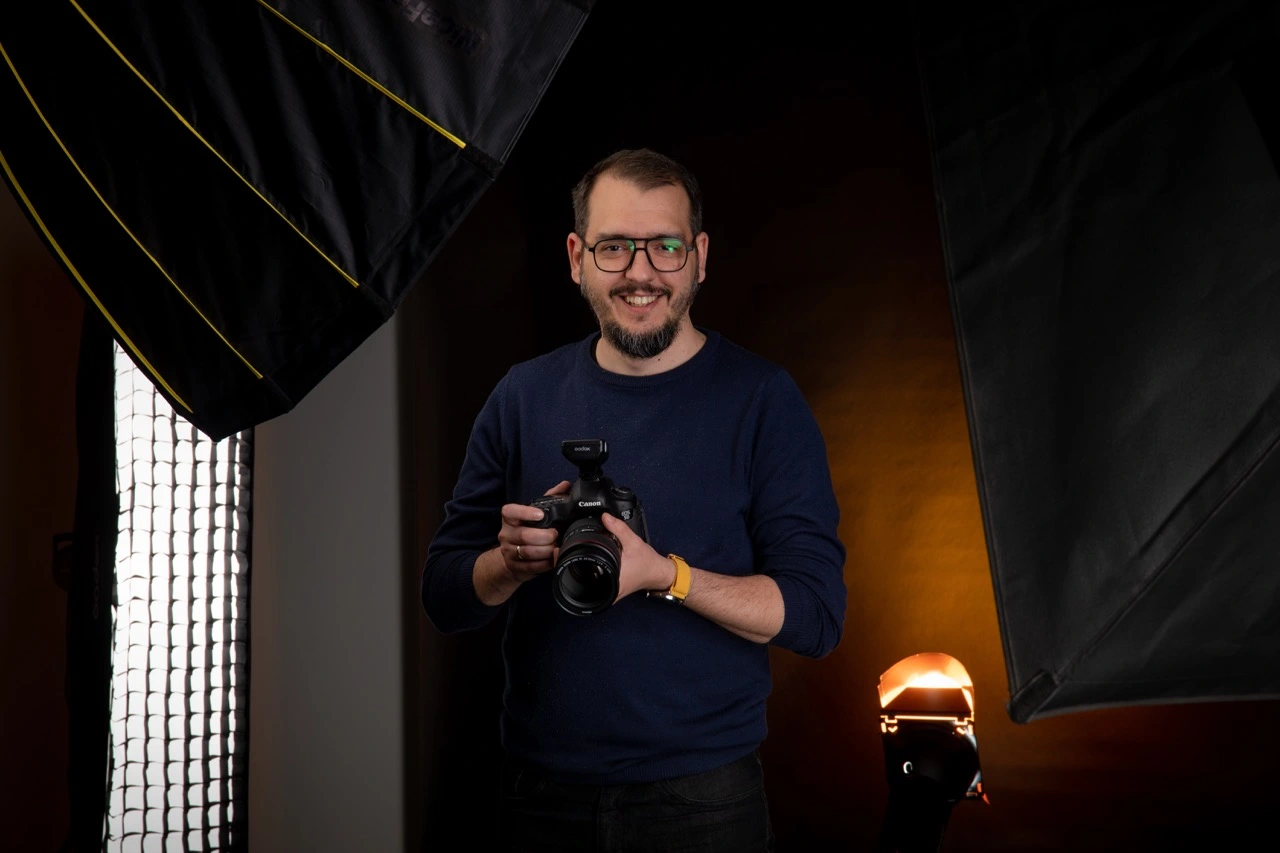
“At its core, product photography is about capturing an object in its most truthful form.” says Marcin Oleksicki, Team Leader of AUTODOC Photostudio, located in Szczecin in Poland, that produces images of 4000 products monthly. “What our team of experts, including photographers, retouchers, assistants and quality control, does is the art of showcasing each product’s design, shape, dimensions, connectors, threads, and markings.” he adds.
Each image is crafted this way to ensure that customers instantly understand what the product is, what its functionalities are, how it looks, and how it might fit into their vehicle. ”Every detail matters because the photograph often becomes the point of comparison between what the customer already has and what they plan to purchase. In this way, product photography acts as a bridge of trust between the seller and the buyer.” says Marcin.
Each image is crafted this way to ensure that customers instantly understand what the product is, what its functionalities are, how it looks, and how it might fit into their vehicle. ”Every detail matters because the photograph often becomes the point of comparison between what the customer already has and what they plan to purchase. In this way, product photography acts as a bridge of trust between the seller and the buyer.” says Marcin.
Function Meets Efficiency: The Studio Setup

A well-organized studio is the backbone of consistent, high-quality service. “A functional studio is not just about having state-of-the-art equipment but also about an efficient workflow. In our setup, there is a dedicated space for every stage of the process: from preparing products for their “moment in the spotlight” to safely staging them for post-shoot packaging. This approach minimizes errors and ensures repeatable results, whether shooting small seals or a large radiator. Such consistency is vital for customer trust, as it allows buyers to easily compare products within a uniform technical catalog.” says Serhii.
Of course, the best studio setup starts with a team: a bunch of true experts who can deliver results in any environment. Three core competences that define a top-tier product photographer are: attention to detail, organizational excellence and collaboration. “A good product photographer is precise, because even his minor mistake can lead to a customer purchasing the wrong product or overlooking an essential feature.” explains Marcin. “Good planning and organizing skills are critical, because of our workload of hundreds of images captured daily: we just need to get it done timely. And last but not least: since a photographer cooperates with assistants, retouchers, and graphic designers, their teamwork skills are fundamental for maintaining quality and efficient workflow.” he adds.
So what does a typical day of a product photographer look like? It begins with carefully arranged shots. Products are organized on carts, ensuring that similar items are photographed together for consistency. Post-shoot, photographers not only manage the images (correcting exposure, maintaining white balance, and framing) but also keep meticulous records of their work. This discipline in documentation is crucial given the sheer volume of daily shots, which range from hundreds of packshots to thousands of 360-degree images.
From Arrival to Display: The Photography Journey
How does the journey of a product in the studio begin? Marcin explains: “First, the Item Data Quality team provides us with a curated list of goods lacking imagery or a novelty hitting the market. Once delivered, products are meticulously prepared. The photo assistants inspect, clean, and arrange each product on a dedicated cart, marking them ready for the photographer’s lens.”
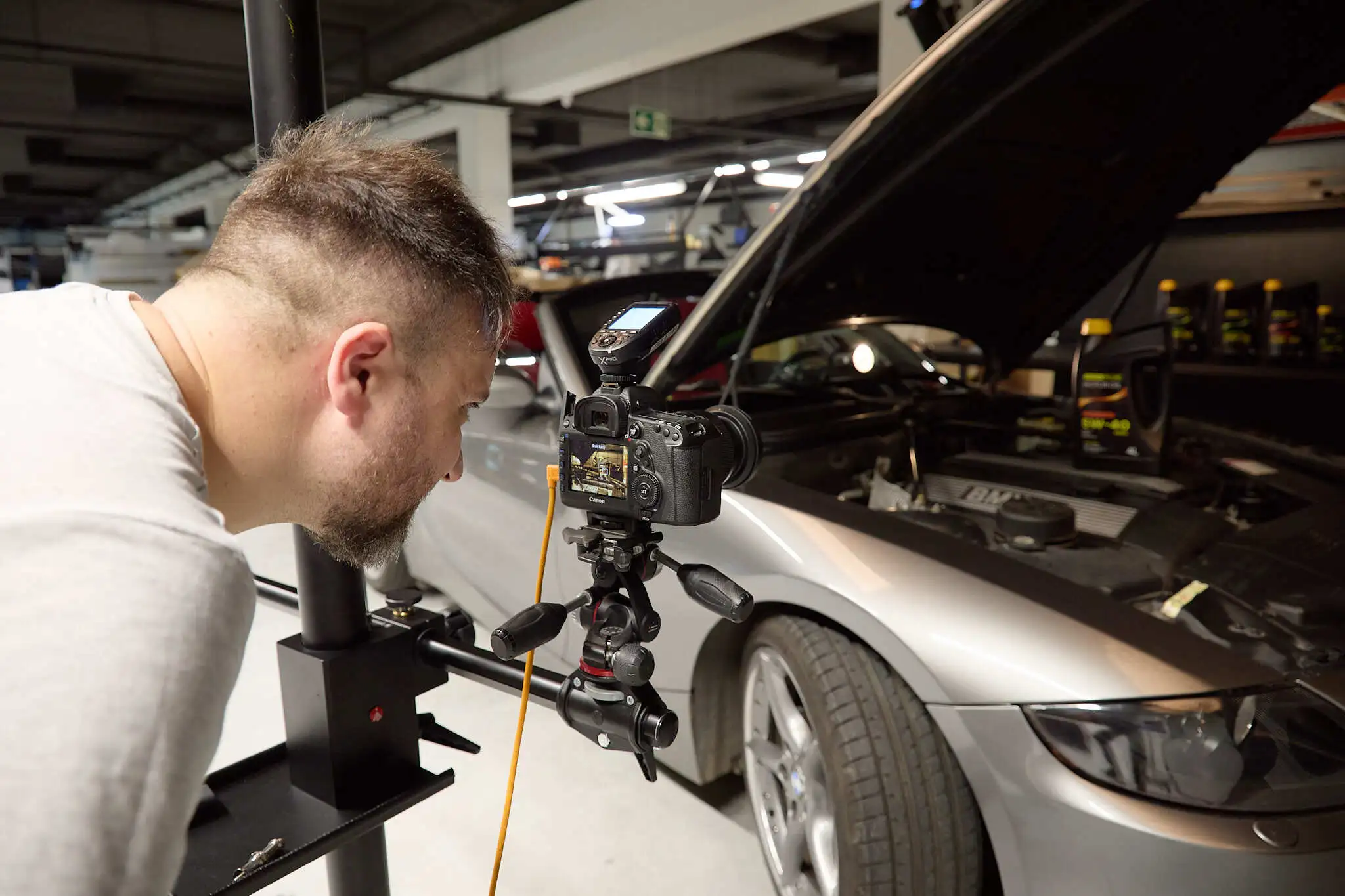
During the shoot, the photographer’s role is comprehensive: setting up the product, choosing angles, ensuring precise exposure and white balance, and managing the sequence of shots. Often, 360-degree photography is employed so that customers can view the product from every angle, further solidifying their trust in what they are purchasing.
After the shooting, images are transferred to a centralized server where colleagues specialized in the photo quality review them for technical accuracy, proper naming, and consistency. Final retouching steps in to remove minor flaws – like dust or glare – while preserving the product’s genuine appearance. “We preserve 99% of the original image and remove only the 1% that distracts – because it’s about clarity, not deception.” highlights Serhii.
Creative vs. Fast: The Role of AI in the Process

How about using Artificial Intelligence in product photography? “As of now, we use AI in our workflow only to remove the background for it speeds up the actual process. We don’t use AI to create images, because we want to maintain a creative approach, not follow a conveyor-belt model.” says Serhii.
“Art is often seen as a release of emotion, but in product photography, art reveals itself through precision and detail. Every product has its own geometry, texture, and material characteristics” adds Marcin. A skilled photographer is like a sculptor: using light, composition, and careful retouching to extract the inherent beauty of each object. “Even technical subjects, like automotive parts, demand a creative approach. With challenges such as reflections on metal surfaces or capturing intricate shapes, every shoot becomes a unique artistic endeavor that carefully balances functionality with aesthetic appeal. This balance is what separates mere craftsmanship from true art.” he adds.
Considering the development of AI powered tools, what’s the future of photo service in e-commerce? “Product photography is far more than a logistical necessity.” says Serhii. “It is a powerful tool that connects the customer with the product and will remain a cornerstone of online shopping.” he adds. From the initial preparation at the studio to the final touches in post-production, every step is designed to illuminate the truth of what’s being sold. “By striking the delicate balance between technical accuracy and creative expression, our approach at AUTODOC ensures that what you see is exactly what you get: clear, detailed, and full of trust-building details. After all, it’s always better to see what you’re buying rather than taking a leap of faith.”
The Studio in Numbers
Here’s a glimpse into the operations of our AUTODOC photography studio:
| Metric | Figures |
| Total Products Captured | Over 150,000 |
| Monthly Product Captures | Approximately 4,000 – 5,000 |
| Shots Per Day (e.g., 360-degree) | Around 5,000 |
| Quality vs. Deleted Shots (Marketing) | ~70/30 |
| Quality vs. Deleted Shots (Packshot) | ~90/10 |
| Quality vs. Deleted Shots (360-degree) | ~98/2 |
28/08/2025, People stories
Related stories

Hybrid сopywriting: amplifying productivity while preserving quality and the soul of creativity
The expansion of the digital horizon with the rise of AI services led some to predict the end of traditional...